The San Francisco Listing Price Game (and Why It Keeps Confusing Buyers)
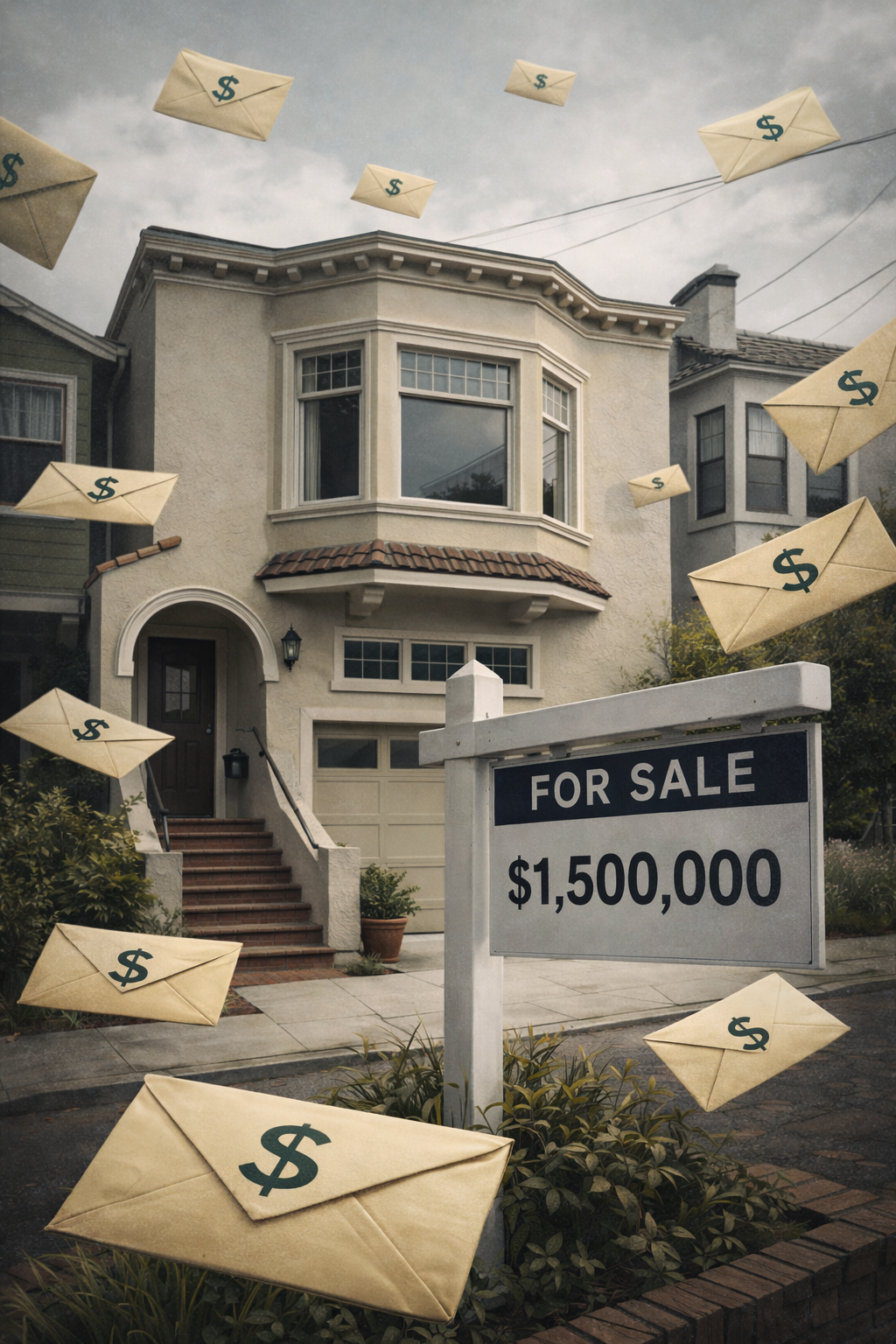
If you spend any time watching listings in The City, you’ve seen this pattern repeat. A Richmond home comes on at $1.5M. No one actually believes it will sell there. A week later it closes at $2.2M. Sometimes higher. Buyers feel misled. First-time buyers feel played. Even experienced ones bristle at what feels like dishonesty.
So why would a seller list a San Francisco house at $1.5M when everyone expects it to sell far above that number?
Because in this market, the list price is often not a declaration of value. It is a mechanism.
In many San Francisco neighborhoods, especially supply-constrained ones like the Richmond, list pricing is designed to function as a bidding engine. List that same home at $2.2M and the buyer pool narrows immediately. Search filters quietly exclude it. Showings slow. Offers arrive cautiously, if they arrive at all. The property sits, losing leverage without much noise.
List it at $1.5M and something very different happens. Ten buyers show up. Some can stretch. Some cannot. All of them create pressure. That pressure, not the list price, is what moves the final number. The market does the work.
This is where the emotional disconnect happens. Buyers often assume the list price reflects reality. Sellers assume buyers understand the strategy. Agents assume everyone has already learned how this works. Those assumptions rarely line up.
What actually matters is not the number on the listing page, but what similar homes have sold for recently, under similar conditions, with similar compromises. When buyers ask why San Francisco homes sell so far above list price, the answer is almost always sitting in the comps. Closed sales tell you what buyers were truly willing to pay, not what was used to start the conversation.
This is also why browsing listings without context can quietly waste a lot of time. You can spend weekends touring homes you were never realistically competitive on, or fall hard for something that was always headed well beyond your comfort zone. That frustration is not inevitable. It is a data problem.
My role is to remove the theater. Before a buyer ever steps inside a house, we look at recent sales, adjust for condition, location, layout, and timing, and talk honestly about where the home is likely to trade. Not perfectly. This is still a live market. But close enough that expectations stay grounded and strategy stays intact.
The San Francisco listing price game is not going away. It is part of how this market clears inventory when demand outpaces supply. Once you stop treating the list price as truth and start treating it as a signal, the process becomes calmer, more rational, and far less personal.
If you are trying to make sense of pricing in The City, especially in neighborhoods where bidding is common, clarity beats optimism every time. Looking at real comps before you engage can save weeks of frustration and a lot of emotional noise. A short, data-driven conversation upfront often makes the entire process easier.