Where Have All the Mansions Gone?
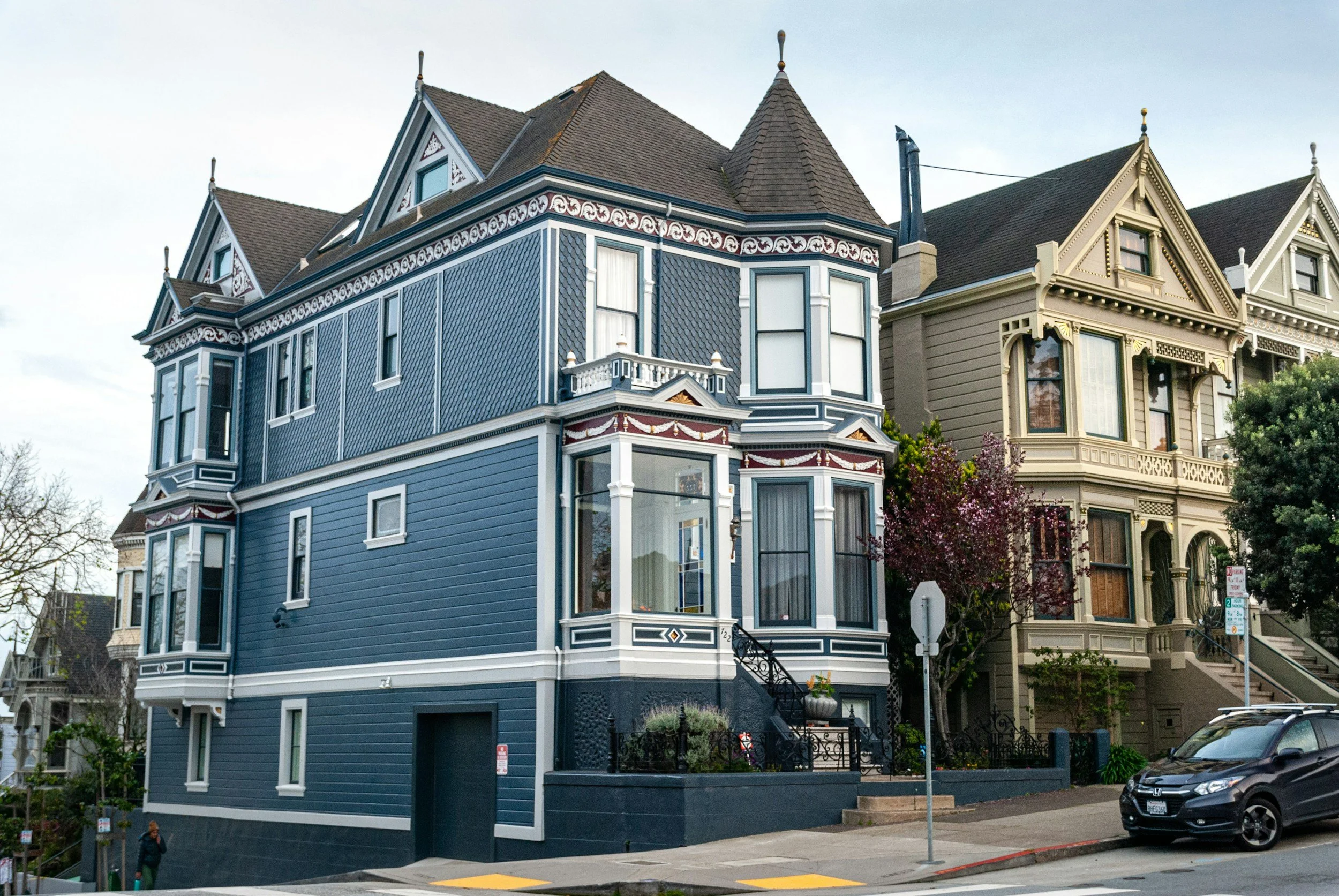
San Francisco has a housing crisis at the top of the market, and it’s affecting all other price points.
Mansion shortage. It sounds like a punchline. And in a city where affordability has been a crisis for decades, talking about a lack of available $10 million homes feels, at minimum, uncomfortable.
But here's the thing: it's real, it's measurable, and it's affecting the entire market, not just the people writing eight-figure checks.
The Numbers
Let's start with what we actually know.
The total number of luxury homes for sale in San Francisco fell 15.2% year over year in March, capping off two straight years of declines. At the beginning of last month, there were only 835 single-family homes listed citywide, well below the roughly 1,100 typically available this time of year. Active listings in San Francisco fell about 20% year-over-year from January 2025, with the inventory shortage forcing buyers to act fast. One in four active listings went into contract last month, as the city sees an absorption rate 45% higher than last January.
When supply tightens this fast, prices respond. The median luxury sale price in San Francisco has climbed to $6,808,561, the highest level for this time of year on record and up 9% year over year. The typical high-end home went under contract in 12 days, which is the fastest pace of any major U.S. metro and down from 28 days a year ago.
And the overbids. In April, 85% of San Francisco homes sold for over list price, with the median sale closing 24.6% over asking - a record. The city logged 26 home sales above $5 million in April, including four above $10 million. All three figures represent new records.
The Cow Hollow Example
If you want to understand what "mansion shortage" actually looks like on the ground, look at what happened on Union Street last month.
A six-bedroom home at 2512 Union Street in Cow Hollow sold for $15 million - nearly double its $7.95 million asking price. The closing price was about 88.7% above asking, marking the largest gap between asking and closing for San Francisco homes above $5 million in at least 26 years, according to Compass. The buyer was an L.A.-based LLC. The listing agent declined to comment. The seller almost certainly did not.
Who's Buying - and Why Now
Unlike in previous tech booms, in which the wealth was created by companies largely based in Silicon Valley, the center of AI is San Francisco. That means neighborhoods across the city are feeling the crunch, not just those like Noe Valley and Bernal Heights that offer easy commutes south.
The buyers driving this are not speculating. They're not flipping. They're people who have decided, often with significant cash positions from AI company equity, that owning a physical asset in one of the most geographically constrained cities in the country is a sensible place to put money. Many agents are linking the urgency to a wave of anticipated initial public offerings from AI heavyweights like OpenAI, Databricks, and Anthropic, all of which have established headquarters in San Francisco. The logic is straightforward: get in now, before that wave fully materializes.
Last fall, sales for luxury homes in San Francisco were up 14% year over year. At the same time, inventory was down roughly 4.5% year over year. That gap has only widened since.
Why Supply Isn't Catching Up
This is the part that doesn't get talked about enough. The shortage isn't just about demand, it's structural.
San Francisco has long suffered from a lack of new large estates. The city's geography, zoning constraints, and preservation policies limit the potential for new high-end inventory. Many potential sellers also hesitate to list, either because they don't want to relocate or they're waiting for market conditions to be even more favorable.
Think about what that means. You have a finite, largely fixed stock of large homes in desirable neighborhoods with views. You have a growing pool of buyers with the resources to compete aggressively. And you have current owners who have little reason to sell into a market where they'd immediately face the same problem on the buy side.
The result is a system under pressure with no obvious release valve.
What This Means in Practice
I've written before about the overbid market and what it means for buyers and sellers across the spectrum. But the luxury shortage is worth understanding on its own terms, because it has downstream effects.
When ultra-wealthy buyers can't find what they want at the top of the market, some of them move down-market. A buyer who came to San Francisco for a $10 million home and can't find one starts looking seriously at $6 million and $7 million properties. That pushes competition into price ranges that weren't previously facing that kind of pressure. The cascade is real.
If you're a seller with a large single-family home in Pacific Heights, Presidio Heights, Sea Cliff, Cow Hollow, or the Marina - and you've been waiting for the right moment - the case for acting now is about as clear as it's been in years. The homes that hit the trifecta for ultra-luxury buyers - views, space, and a full renovation - are receiving multiple offers at extraordinary prices. The $56 million Vallejo Street sale earlier this year had multiple offers over $50 million. Off-market.
If you're a buyer, the honest answer is that you need to move faster than feels comfortable and be prepared to compete without the safety nets you might have expected. Pre-approval isn't enough. You need to understand your ceiling before you walk into an open house, and you need an agent who knows how to structure an offer that stands out when six other serious buyers are doing the same thing.
The Broader Point
San Francisco real estate has always rewarded people willing to bet on The City when the narrative was pointing the other way. The last few years gave a lot of people reasons to hesitate. Now the hesitation is expensive.
The mansion shortage is a real phenomenon. The overbids are not headline noise. And the structural supply problem - geography, zoning, seller psychology - isn't resolving itself anytime soon.
If you're thinking about buying or selling in this market, I'm happy to talk through what the data actually means for your specific situation.